
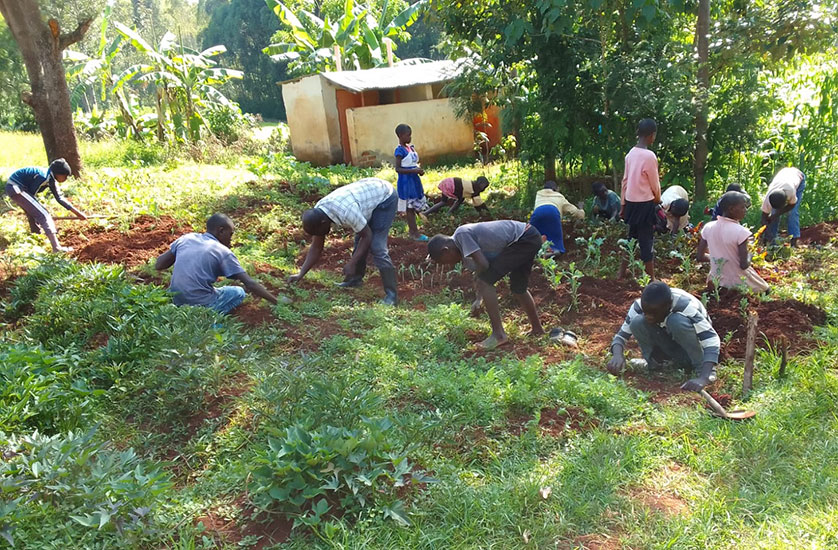
For the Aruba Kinship Family, some of the most meaningful moments happen in the garden. What may look like simple gardening is actually something much deeper. It’s a hands-on experience that’s helping shape who they’re becoming.
Where Healthy Habits Begin
One of the most beautiful outcomes of these agricultural activities is how they shape the way our children think about food.
By planting, nurturing, and harvesting their own crops, our children begin to understand where their meals come from. Fresh fruits and vegetables are no longer unfamiliar. They’re something they’ve grown with their own hands. This naturally encourages healthier eating habits and helps them build a strong foundation for lifelong wellness, strengthening their bodies and supporting their immunity.
Learning Through Movement
Agriculture also keeps our children active in a meaningful way.
Simple tasks like digging, planting seeds, watering, and weeding become opportunities for them to build strength and coordination. These activities support both their fine and gross motor skills while giving our children a sense of accomplishment. It’s movement with purpose. Exercise that feels like play.
Growing Together
But perhaps even more impactful is what happens between the children as they work side by side.
In the garden, teamwork comes naturally. They learn to help one another, share responsibilities, and celebrate progress together. These shared moments build trust, deepen relationships, and create a sense of family. Love grows here just as much as the crops do.
Caring for Creation
Through agriculture, our children also develop a deep respect for the world around them.
They learn the importance of caring for the land, conserving water, and using resources wisely. These lessons instill a sense of responsibility and stewardship, helping them understand that even small actions can make a big difference.
Understanding Sustainability
As our children watch their crops grow from seed to harvest, they begin to grasp something powerful: food doesn’t just appear, it’s cultivated with care, time, and effort.
This understanding builds awareness of sustainability and food security. It equips them with practical knowledge they can carry into the future, empowering them to provide for themselves and their communities one day.
Nurturing Minds and Hearts
There’s also a quiet, calming effect that comes with working in the garden.
Focusing on planting and caring for crops helps our children slow down, concentrate, and engage their minds in a healthy way. These moments can improve learning, boost confidence, and support emotional well-being. The garden becomes a place of peace, growth, and discovery.
Lessons in Patience and Responsibility
Perhaps one of the most valuable lessons agriculture teaches is patience.
Seeds don’t grow overnight. The children learn to wait, to care consistently, and to stay committed even when results aren’t immediate. Through watering, weeding, and tending to their plants, they develop a sense of responsibility and pride in their work.
And when the first signs of growth appear, the joy is undeniable.
More than an Activity
For the Aruba Kinship Family, agriculture is more than an activity: it’s a powerful tool for transformation.
Through every seed planted and every plant nurtured, our children are learning how to care for their bodies, their environment, and one another. They are gaining skills, confidence, and values that will stay with them for a lifetime.
And in the process, they’re not just growing food, they’re growing into strong, capable, and compassionate individuals.